The master of St. Benedict's, Vol. 2 (of 2) — Key Ideas to Explore

(0 User reviews)   512
St. Aubyn, Alan Project Gutenberg 2019 Not confirmed
School principals -- Fiction; Cambridge (England) -- Fiction; Students -- Fiction Readers of public-domain and historical texts
Project Gutenberg digital edition en

Edition facts

Words 39,193
Reading time 171 min
Text sections 4

The source record for The master of St. Benedict's, Vol. 2 (of 2) — Key Ideas to Explore measures this digital text at 39,193 words, 2 hr 51 min estimated reading time, and 4 detected text sections.

The text analysis averages about 17.1 words per sentence, while the detected sections provide another way to judge how the source is divided.

Project Gutenberg metadata also associates the work with “School principals -- Fiction,” connecting these edition facts with the source record’s subject description.

Explore this collection

Compare your next read

These alternatives are selected using recorded categories and estimated reading time.

Search stored excerpts and compare books → Choose by your preferences →

How these choices and excerpts are prepared

Choices use stored catalog measurements. Estimates vary with reading speed. A shared category is a catalog label, not a claim that two books have the same argument or literary quality.

Search reads excerpt text stored with this catalog and links to its associated Gutenberg record. The connection is stored in the site database; this tool does not recheck that every excerpt is word-for-word identical to that external record. Excerpt search does not cover every chapter and does not verify historical publication dates.

Catalog snapshot checked: 2026-09-26. Coverage: 98 public books, 98 available source excerpts.

In this second volume of Alan St. Aubyn's Cambridge novel, Lucy's romantic expectations clash with academic realities as the Senior Wrangler list is announced. The narrative focuses on personal relationships and college life, with the Master's health and a student's hidden struggles complicating the plot.
Share
Editorial Edition Score 4.5/5

Calculated from edition completeness, EPUB availability, text structure and catalogue metadata. Not a user rating.

How this score is calculated
  • Description quality20 pts
  • Title & short description10 pts
  • Source metadata20 pts
  • Text length15 pts
  • Chapters / structure15 pts
  • EPUB file integrity20 pts

Total of 100 points, scaled to a 2.5-5.0 range. Editions with an empty description or a missing EPUB file are not scored.

Edition quality

Public-domain source text

Read the source text

The source text is kept in the dedicated reader, separate from this catalogue record and its commentary.

The second volume of The Master of St. Benedict's opens with a rainy morning that sets the tone for the emotional weather ahead. Lucy, waiting in a lane for a man who does not appear, is met instead by Eric, who reports that the Master has slept better. The scene immediately establishes a pattern of missed connections and indirect communication. The weather is not mere backdrop: the leaves, described as 'fresh young leaves with the tender green of the year upon them,' are personified as weeping and growing darker, mirroring the characters' own disappointments. This attention to natural detail as emotional register recurs throughout the excerpts.

Weather as Emotional Barometer

The excerpts repeatedly use weather to underscore mood and foreshadow events. The opening chapter, 'In the Lane,' describes a 'shivering, blowy, rainy morning' where trees 'tossed their arms wildly in the air, and sighed and moaned.' The leaves, after a 'night of weeping,' will never be the same—a direct parallel to Lucy's own dawning awareness that her expectations may be unmet. Later, at the Senate House, the crowd's tension is punctuated by the clock of 'great St. Mary's' and the examiner's deliberate delay. The weather is not simply atmospheric; it is a narrative device that externalizes inner states, a technique St. Aubyn employs consistently in these chapters.

Academic Triumph and Personal Cost

The announcement of Wyatt Edgell as Senior Wrangler is the dramatic centerpiece of the excerpts. The scene is vividly rendered: the crowd's shouts, Eric Gwatkin's 'ridiculous' cap-waving, and Lucy's flushed triumph. Yet the moment is undercut by a 'strange hush' upon her return to St. Benedict's, where men look at her 'with a strange kind of pity.' The juxtaposition of public glory and private foreboding is sharp. Lucy's thought—'it was her victory—hers!'—reveals her possessive investment in Edgell's success, while the ominous silence suggests that academic achievement may come at a human cost not yet disclosed.

College Hierarchy and Social Observation

St. Aubyn populates his Cambridge with a keen eye for social strata. The bed-maker who finds the Master under a table is 'a seer or a sibyl'; the Proctor at the Senate House is 'unpopular' and noted for 'an eye to business.' These minor characters add texture and humor. The crowd of 'mothers and fathers and sisters and cousins' at the list-reading, alongside the 'sweet young English womanhood' who envy Lucy, paints a detailed picture of the university as a social arena. The narrative voice is often wry: 'They couldn't all be Senior Wranglers!' This blend of affection and irony characterizes St. Aubyn's treatment of college life.

Readers should attend to the gaps in the excerpts: what happens after the hush in the court? The text hints at a crisis involving the Master or Mrs. Rae, but the full resolution is not given. St. Aubyn's strength lies in the accumulation of small, telling details—a turned umbrella, a covert-coat, a liqueur-case—that build a world both familiar and fraught. Approach this volume as a character study in which academic success is only one thread in a tangled weave of personal relationships.

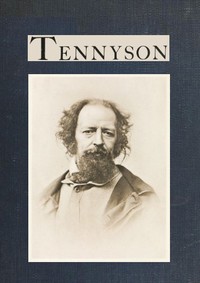
Those aching moments in St. Benedict's, when Lucy’s hopes meet the cold arithmetic of the Wrangler list, always leave me thinking of how Tennyson wrestled with similar griefs—the distance between what we dream and what the world grants. There’s a particular quietness to that old poem’s consolation, a texture of resignation that settles gently beside this novel’s quieter sorrows. Tennyson — Themes and Context has lingered with me ever since.

There are no reviews for this eBook.

0
0 out of 5 (0 User reviews )

Add a Review

Your Rating *
There are no comments for this eBook.

Reader reflection

Record your reading impressions

A brief reflection can help important ideas stay with you longer.

Your progress 0 / 10
1

How far have you progressed with this book?

2

What was your overall reaction to the book?

3

How likely are you to recommend this book?

4

How much effort did this book require?

Related eBooks