About 297 minutes
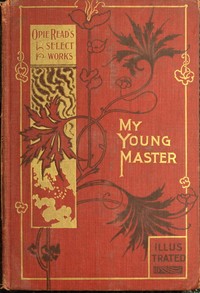
My Young Master: A Novel — Key Ideas to Explore
Machines Inventions Early Science Fiction
68,292 recorded words. 6 minutes difference from this book's estimate.
View Gutenberg source #59834
A History of Story-telling: Studies in the development of narrative — Key Ideas to Explore can be approached with a clearer sense of reading commitment from its source measurements: 69,502 words, 5 hr 3 min estimated reading time, and 10 detected text sections.
The text analysis averages about 22.1 words per sentence, while the detected sections provide another way to judge how the source is divided.
Project Gutenberg metadata also associates the work with “Fiction -- History and criticism,” connecting these edition facts with the source record’s subject description.
Explore this collection
These alternatives are selected using recorded categories and estimated reading time.
About 297 minutes
Machines Inventions Early Science Fiction
68,292 recorded words. 6 minutes difference from this book's estimate.
View Gutenberg source #59834About 309 minutes
Machines Inventions Early Science Fiction
70,868 recorded words. 6 minutes difference from this book's estimate.
View Gutenberg source #65076About 285 minutes
Machines Inventions Early Science Fiction
65,365 recorded words. 18 minutes difference from this book's estimate.
View Gutenberg source #64907Search stored excerpts and compare books → Choose by your preferences →
Choices use stored catalog measurements. Estimates vary with reading speed. A shared category is a catalog label, not a claim that two books have the same argument or literary quality.
Search reads excerpt text stored with this catalog and links to its associated Gutenberg record. The connection is stored in the site database; this tool does not recheck that every excerpt is word-for-word identical to that external record. Excerpt search does not cover every chapter and does not verify historical publication dates.
Catalog snapshot checked: 2026-09-26. Coverage: 98 public books, 98 available source excerpts.
Calculated from edition completeness, EPUB availability, text structure and catalogue metadata. Not a user rating.
Total of 100 points, scaled to a 2.5-5.0 range. Editions with an empty description or a missing EPUB file are not scored.
Public-domain source text
The source text is kept in the dedicated reader, separate from this catalogue record and its commentary.
Arthur Ransome opens his preface with a spring day and a brown French inn, immediately establishing the personal, unhurried tone that distinguishes this study from a conventional literary history. He declares his aim not to compile dates and facts—that work, he notes, has been done by Dunlop and Raleigh—but to write of story-telling as a man might write of painting or jewellery, with a livelier imp astride his pen. The book proceeds as a series of linked essays, each focused on a single author or a comparative pair, moving from the early novelists through the Romantics and into the nineteenth century. Ransome’s method is to isolate a structural or thematic feature—Fielding’s use of a consistent moral scheme, Smollett’s tentative touch of quasi-supernatural horror—and trace its implications for the art of narrative.
The preface is not a mere courtesy but a deliberate statement of method. Ransome writes in a flood of sunlight, aware that his book will be criticised for omissions, and he meets that criticism head-on with an analogy: quarrelling with a guinea-pig because it has no tail. He distinguishes his project from a chronicle, insisting that the word history can mean making a great deal of talk about a thing. The schoolmaster, he says, was to be sent to steal apples in the orchard. This image of playful, purposeful theft captures his approach—he will take here a book and there a book, not to catalogue but to notice how stories work. The preface also reveals his intended audience: readers who care about the craft of narrative, not those seeking a reference work.
In his discussion of Fielding, Ransome focuses on the novelist’s ability to build a consistent moral architecture. He quotes a list of maxims from Jonathan Wild—that virtues are easily counterfeited, that many men are undone by not going deep enough in roguery—and praises the scrupulous attention to the main idea and consistency of mood. Ransome argues that Fielding’s scheme is so tight that Poe himself could have built no more skilfully, though he lacked Fielding’s knowledge of rascaldom for the straw for his bricks. This comparison is typical of Ransome’s method: he sets authors side by side to illuminate their structural choices. He then contrasts Fielding with Smollett, whose Ferdinand, Count Fathom fails because the author promised eventual conversion and thus could not make his villain respectably wicked. The book, Ransome says, is not true to itself.
Ransome identifies in Smollett’s work a fumbling, hesitant first attempt at quasi-supernatural horror—the device for the undoing of Celinda—which he calls the first warning of the Radcliffes and Lewises with their groans upon the battlements. Smollett, he says, jangled the note and passed on, inartistic, to reform his count. But Ransome also credits Smollett with a wider range than Fielding, and he singles out Humphry Clinker for its innovative use of the novel in letters. The scheme is clear: describe the same scenes and events simultaneously from several points of view, with half a dozen personalities revolving round a story. Ransome notes that Smollett, writing at fifty and just about to die, seems to have forgotten his old feud with life and looked at things with a kindlier eye, achieving a detachment that allowed his characters to become rounded and complete.
Throughout the book, Ransome builds his arguments through direct comparison, often within a single paragraph. He sets Fielding’s Tom Jones beside Joseph Andrews, then contrasts both with Smollett’s Roderick Random and Humphry Clinker. He measures the success of a work by its internal consistency: a book must be true to itself, and an author must be sufficient of an artist to send his hero to hell if the scheme demands it. Ransome’s own voice is present but not intrusive; he admits to being a little ungracious to Smollett, then concedes that there is little to choose between the pleasures the two authors have given him. This willingness to hold two judgements in balance gives the criticism a humane, essayistic quality. The portraits by J. Gavin, one per volume in the series, reinforce the sense of encountering individual makers of stories.
Ransome’s study rewards readers who enjoy watching a critic think on the page. He does not pretend to completeness, and his choices—Fielding over Richardson, Smollett over Sterne—are frankly personal. The value lies in the precision of his observations: a scheme worked out with scrupulous attention, a note jangled and passed on, a late-won detachment that clarifies a book’s structure. For those interested in how narrative forms develop through individual decisions, this is a lively, opinionated guide.
Arthur Ransome’s quiet study always reminded me how a story waits for its reader, much as a held breath waits for release. There is a similar patience in The Other Man — A Reader’s Guide, which lingers over the unnamed, the overlooked. Both books whisper the same gentle truth: every telling has its shadow, and that shadow deserves our attention.
Build a private reading journal entry for this title.