About 355 minutes
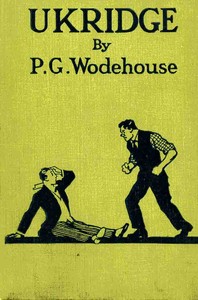
Ukridge — Background and Themes
Machines Inventions Early Science Fiction
81,564 recorded words. 19 minutes difference from this book's estimate.
View Gutenberg source #61507
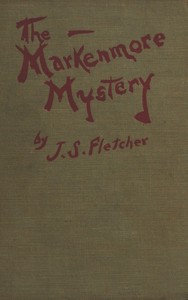
The catalog record for The Markenmore Mystery — Context and Discussion provides practical reading context through 85,794 words, 6 hr 14 min estimated reading time, and 8 detected text sections.
The text analysis averages about 13.4 words per sentence, while the detected sections provide another way to judge how the source is divided.
Project Gutenberg metadata also associates the work with “Detective and mystery stories,” connecting these edition facts with the source record’s subject description.
Explore this collection
These alternatives are selected using recorded categories and estimated reading time.
About 355 minutes
Machines Inventions Early Science Fiction
81,564 recorded words. 19 minutes difference from this book's estimate.
View Gutenberg source #61507About 416 minutes
Machines Inventions Early Science Fiction
95,531 recorded words. 42 minutes difference from this book's estimate.
View Gutenberg source #60455About 329 minutes
Machines Inventions Early Science Fiction
75,599 recorded words. 45 minutes difference from this book's estimate.
View Gutenberg source #63939Search stored excerpts and compare books → Choose by your preferences →
Choices use stored catalog measurements. Estimates vary with reading speed. A shared category is a catalog label, not a claim that two books have the same argument or literary quality.
Search reads excerpt text stored with this catalog and links to its associated Gutenberg record. The connection is stored in the site database; this tool does not recheck that every excerpt is word-for-word identical to that external record. Excerpt search does not cover every chapter and does not verify historical publication dates.
Catalog snapshot checked: 2026-09-26. Coverage: 98 public books, 98 available source excerpts.
Calculated from edition completeness, EPUB availability, text structure and catalogue metadata. Not a user rating.
Total of 100 points, scaled to a 2.5-5.0 range. Editions with an empty description or a missing EPUB file are not scored.
Public-domain source text
The source text is kept in the dedicated reader, separate from this catalogue record and its commentary.
Braxfield, the butler at Markenmore Court, has a habit of locking up the house at precisely eight o'clock every evening—a rule he maintains even as the family's elder son, Guy Markenmore, returns after years away. This detail of domestic routine, established in the first chapter, sets the tone for a mystery where order and disruption are in constant tension. The butler's quiet autocracy, described as wielding a 'mild, unobtrusive autocracy,' contrasts with the violent death that soon follows. Fletcher builds the narrative around precise times and places: the eight o'clock lock-up, the ten o'clock express train, the station platform where detective Blick waits. These fixed points anchor a story that otherwise deals with disappearances and hidden motives.
The opening chapter introduces Braxfield as a man of method, virtually master of the house due to Sir Anthony's invalid state and the sons' absence. His rule—locking up at eight—is presented as a fad, but it establishes a pattern of control that the murder will shatter. The family hierarchy is strained: the elder son Guy has not crossed his father's threshold for years; the younger son Harry prefers not to exercise authority; the daughter Valencia is just out of the schoolroom. This leaves Braxfield as the de facto authority, a position that becomes significant when the mystery unfolds. Fletcher uses the butler's perspective to show a household where order is maintained by a servant, not the family, hinting at deeper dysfunctions.
Fletcher anchors the investigation in concrete details of time and place. Detective Blick coordinates with the Chief Constable, sets a meeting at the station for ten o'clock, and watches the booking-office. The express train's arrival is timed precisely: 'Ten o'clock chimed from the many towers in the city' and the train enters 'with a roar and a rattle.' The disappearance of a suspect—the Baron—is reported through a groom who says he 'hooked it during the night.' The narrative emphasizes what can be observed: a vacant seat, a missing person, a locked room. These physical clues, rather than psychological speculation, drive the plot forward.
Dialogue in the excerpts reveals how information is filtered through different speakers. The groom Pegge reports Mrs. Tretheroe's belief that the Baron 'often went out walking very late at night' and that she thinks he's 'had an accident.' But Pegge himself says he 'made out' that she thought this, adding a layer of hearsay. Blick's responses are terse—'Gone!' and 'Where is he?'—showing a detective who demands direct facts. The contrast between the butler's methodical narration and the fragmented reports from other characters creates a sense of uncertainty. Fletcher uses these varying voices to build a mystery where no single account can be trusted.
Readers should pay close attention to the precise times and locations mentioned in each chapter, as Fletcher uses them as structural markers. The butler's habits, the train schedules, and the characters' movements are not mere atmosphere but likely hold the key to the puzzle. The excerpts suggest a story where the solution depends on reconciling conflicting reports and observing what is absent as much as what is present.
I have always cherished how The Markenmore Mystery finds its truth in locked rooms and butlers' ledgers, where the domestic hides the chaotic. It whispers of order concealing what time reveals. That same quiet patience lives in Nameless River — Edition Insights, a book that understands how secrets settle into furniture and riverbeds alike. They are old friends, those two.
Build a private reading journal entry for this title.