About 471 minutes
The Clean Heart — A Reader’s Guide
Machines Inventions Early Science Fiction
108,291 recorded words. 11 minutes difference from this book's estimate.
View Gutenberg source #62758
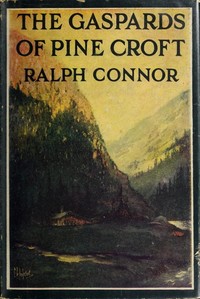
The catalog record for The Gaspards of Pine Croft: A Romance of the Windermere — Context and Discussion provides practical reading context through 105,689 words, 7 hr 40 min estimated reading time, and 26 detected text sections.
The text analysis averages about 13.0 words per sentence, while the detected sections provide another way to judge how the source is divided.
Project Gutenberg metadata also associates the work with “British Columbia -- Fiction,” connecting these edition facts with the source record’s subject description.
Explore this collection
These alternatives are selected using recorded categories and estimated reading time.
About 471 minutes
Machines Inventions Early Science Fiction
108,291 recorded words. 11 minutes difference from this book's estimate.
View Gutenberg source #62758About 443 minutes
Machines Inventions Early Science Fiction
101,710 recorded words. 17 minutes difference from this book's estimate.
View Gutenberg source #64567About 416 minutes
Machines Inventions Early Science Fiction
95,531 recorded words. 44 minutes difference from this book's estimate.
View Gutenberg source #60455Search stored excerpts and compare books → Choose by your preferences →
Choices use stored catalog measurements. Estimates vary with reading speed. A shared category is a catalog label, not a claim that two books have the same argument or literary quality.
Search reads excerpt text stored with this catalog and links to its associated Gutenberg record. The connection is stored in the site database; this tool does not recheck that every excerpt is word-for-word identical to that external record. Excerpt search does not cover every chapter and does not verify historical publication dates.
Catalog snapshot checked: 2026-09-26. Coverage: 98 public books, 98 available source excerpts.
Calculated from edition completeness, EPUB availability, text structure and catalogue metadata. Not a user rating.
Total of 100 points, scaled to a 2.5-5.0 range. Editions with an empty description or a missing EPUB file are not scored.
Public-domain source text
The source text is kept in the dedicated reader, separate from this catalogue record and its commentary.
The novel begins not with characters but with a valley: the Windermere, described as a 'great genial smile across the face of British Columbia.' This opening paragraph, rich in color and scale, establishes a narrator who treats landscape as a living presence. The prose moves from broad geographic sweep—'the valley rolls itself on both sides of the Columbia River'—to a specific autumn day when Hugh Gaspard first sees it. The narrator then immediately pivots to Hugh's mixed Highland Scot and Gallic blood, calling it a 'mingled blood strain' that shapes his temperament. This early shift from external vista to internal inheritance sets up a pattern: the novel will alternate between expansive natural description and close attention to character psychology.
The opening chapter devotes nearly its first page to the Windermere valley before introducing any human figure. The narrator describes 'wide stretches of grass lands' and 'great reaches of red pine forest' with a painterly eye—fitting, since Hugh Gaspard is both engineer and artist. This descriptive mode returns throughout the excerpts, but it is not static. When the narrative moves to Paul and Peggy's moonlit conversation, the setting shrinks to a corral and a paddock. The 'soft light of the September moon' replaces the broad daylight of the valley. The narrator uses landscape to modulate pace: broad, unhurried paragraphs for scenery; shorter, dialogue-driven sentences for intimate scenes. The contrast between the opening's panoramic tone and the later scene's close focus on two young people is deliberate, suggesting a novel that moves between epic and domestic registers.
The excerpted dialogue between Paul and Peggy reveals a narrator attentive to the rhythms of adolescent speech. Peggy's reproach—'Paul, you are just forgetting all about us'—is followed by Paul's defensive 'Yes! I guess that's so, Peg.' The narrator inserts brief tags like 'said Peg cheerfully' and 'exclaimed Paul, restored to good humour,' but also allows longer exchanges without interruption. The kiss scene is handled with notable restraint: Paul's thought 'I think—I'd like to kiss you' is followed by a description of 'queer stirrings within him.' The narrator does not linger on physical sensation but instead notes Paul's confusion—'he seemed another being.' This restraint keeps the voice consistent with the earlier, more formal opening, even as the subject becomes more personal. The dialogue itself carries the emotional weight, with the narrator stepping back to observe rather than explain.
The excerpts show a narrator who controls pace through paragraph length and narrative summary. The opening description of the valley is a single long paragraph, its clauses linked by commas and 'and'—a cumulative rhythm that mimics the valley's expanse. In contrast, the later scene uses short paragraphs and frequent line breaks, especially during the kiss: 'He suddenly caught her in his arms and kissed her.' The following paragraph begins 'Oh, Paul, that was my nose,' a comic deflation that shifts the mood abruptly. The narrator also compresses time with phrases like 'Paul turned this over in his mind' and 'It came to him all at once,' moving from external action to internal reflection. This alternation between summary and scene, between broad description and tight dialogue, gives the novel a variable tempo that keeps the reader moving between observation and immersion.
Readers will find that the novel's voice is not uniform: it can be expansive and almost geological in one chapter, then tightly focused on a single gesture in the next. Pay attention to how the narrator uses landscape to set emotional tone, and how dialogue often carries the burden of character development. The excerpts suggest a work that values both the sweep of the Canadian West and the small, awkward moments of young love.
Sometimes I think of the way The Gaspards of Pine Croft lingers on that first quiet exchange by the lake, how the mountains seem to hold their breath around two people learning each other. It reminded me of another old friend, Rue and Roses — Text and Context, where a garden does something similar—patient, watchful, letting small moments unfurl on their own.
Answer a few questions and save a private reflection on this device.