About 46 minutes
The Priest and the Acolyte With an Introductory Protest by Stuart Mason — Reading Notes
Machines Inventions Early Science Fiction
10,512 recorded words. 3 minutes difference from this book's estimate.
View Gutenberg source #60229
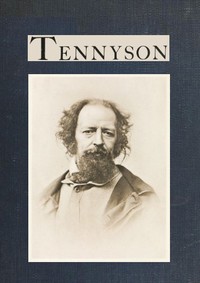
This digital edition of Tennyson — Themes and Context is described by source-level measurements including 11,096 words, 49 min estimated reading time, and 3 detected text sections.
The text analysis averages about 24.0 words per sentence, while the detected sections provide another way to judge how the source is divided.
Project Gutenberg metadata also associates the work with “Philosophy in literature,” connecting these edition facts with the source record’s subject description.
Explore this collection
These alternatives are selected using recorded categories and estimated reading time.
About 46 minutes
Machines Inventions Early Science Fiction
10,512 recorded words. 3 minutes difference from this book's estimate.
View Gutenberg source #60229About 59 minutes
Machines Inventions Early Science Fiction
13,405 recorded words. 10 minutes difference from this book's estimate.
View Gutenberg source #63009About 171 minutes
Machines Inventions Early Science Fiction
39,193 recorded words. 122 minutes difference from this book's estimate.
View Gutenberg source #58945Search stored excerpts and compare books → Choose by your preferences →
Choices use stored catalog measurements. Estimates vary with reading speed. A shared category is a catalog label, not a claim that two books have the same argument or literary quality.
Search reads excerpt text stored with this catalog and links to its associated Gutenberg record. The connection is stored in the site database; this tool does not recheck that every excerpt is word-for-word identical to that external record. Excerpt search does not cover every chapter and does not verify historical publication dates.
Catalog snapshot checked: 2026-09-26. Coverage: 98 public books, 98 available source excerpts.
Calculated from edition completeness, EPUB availability, text structure and catalogue metadata. Not a user rating.
Total of 100 points, scaled to a 2.5-5.0 range. Editions with an empty description or a missing EPUB file are not scored.
Public-domain source text
The source text is kept in the dedicated reader, separate from this catalogue record and its commentary.
Chesterton opens by arguing that Tennyson was 'naturally not only a pure lover of beauty, but a pure lover of beauty in a much more peculiar and distinguished sense' than poets like Keats. He claims Tennyson was most successful when describing art—statues, buildings—rather than nature, blending 'aspiration and exactitude.' This editorial note traces how the book’s structure moves between biographical setting and critical analysis, using recurring images of brooks, churches, and portraits to frame Tennyson’s development.
The Somersby Brook appears repeatedly in the excerpts, first in a quoted poem that describes it purling 'o’er matted cress and ribbed sand' and dimpling 'in the dark of rushy coves.' The biographers note that Tennyson 'always spoke with affectionate remembrance of his early home' and that the brook 'haunted the poet throughout his life.' Yet they also record his denial that his famous poem 'The Brook' was addressed to any particular stream. This tension—between a specific, cherished memory and a universalized artistic creation—illustrates Chesterton’s claim that Tennyson was a 'pure lover of beauty' who transformed personal landscapes into abstract art.
The text shifts between domestic interiors and ecclesiastical settings. Tennyson’s childhood home is described with 'pointed stained-glass casements' and a 'pleasant drawing-room, lined with bookshelves.' His father, the 'stern Doctor,' held two livings, conducting service at Somersby Church in the morning and Bag Enderby in the afternoon. The church roof was thatched, and the poet listened to sermons from 'the squire’s roomy pew.' This juxtaposition of cozy, book-lined rooms and rustic, thatched churches mirrors Chesterton’s observation that Tennyson excelled at describing buildings—structures that combine human aspiration with exact craftsmanship.
The list of illustrations reveals a deliberate visual structure: portraits of Tennyson at different ages alternate with images of places (Somersby Rectory, Louth, Farringford) and scenes from his poems (The Lady of Shalott, Mariana in the South). The frontispiece is a photograph by the London Stereoscopic Co., and later images include works by Samuel Laurence, G. F. Watts, and a chalk drawing by M. Arnault. This arrangement suggests a biographical method that moves between the man and his creations, much as Chesterton argues Tennyson moved between nature and art. The facsimile of 'Crossing the Bar' manuscript grounds the abstract in the physical.
Chesterton’s opening paragraph sets up a contrast between Tennyson as a 'philosophic poet' by accident and a 'pure lover of beauty' by nature. He claims Tennyson 'chose them like a landscape painter rather than like a religious poet,' and that he was 'never so successful or so triumphant as when he was describing not Nature, but art.' This argument is supported by the biographical note’s emphasis on Tennyson’s early environment—the brook, the church, the bookshelves—as raw material for his art. The structure of the book itself, moving from critical essay to biographical sketch, enacts this movement from abstract beauty to concrete life.
Readers may find it useful to attend to how Chesterton and Garnett weave together description of place and analysis of verse. The brook, the church, and the portrait are not mere background but active elements in a argument about Tennyson’s artistic priorities. By observing these recurrences, one can see how the book itself enacts the movement between nature and art that Chesterton identifies as central to Tennyson’s work.
The rain kept up its patient drumming on the window, and I lost myself in how Tennyson moves from a wild coastline to a carved cup, never leaving the texture behind. That quiet exchange between raw nature and the things we make stayed with me, so later I reached for Rue and Roses — Text and Context, wondering if another poet felt the same steady hand.
A brief reflection can help important ideas stay with you longer.