About 443 minutes
Nordenholt's Million — Background and Themes
Machines Inventions Early Science Fiction
101,710 recorded words. 27 minutes difference from this book's estimate.
View Gutenberg source #64567
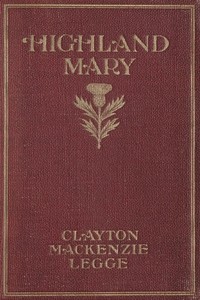
The source record for Highland Mary: The Romance of a Poet A Novel — Background and Themes measures this digital text at 95,531 words, 6 hr 56 min estimated reading time, and 10 detected text sections.
The text analysis averages about 16.2 words per sentence, while the detected sections provide another way to judge how the source is divided.
Project Gutenberg metadata also associates the work with “Burns, Robert, 1759-1796 -- Fiction,” connecting these edition facts with the source record’s subject description.
Explore this collection
These alternatives are selected using recorded categories and estimated reading time.
About 443 minutes
Machines Inventions Early Science Fiction
101,710 recorded words. 27 minutes difference from this book's estimate.
View Gutenberg source #64567About 374 minutes
Machines Inventions Early Science Fiction
85,794 recorded words. 42 minutes difference from this book's estimate.
View Gutenberg source #59818About 460 minutes
Machines Inventions Early Science Fiction
105,689 recorded words. 44 minutes difference from this book's estimate.
View Gutenberg source #59499Search stored excerpts and compare books → Choose by your preferences →
Choices use stored catalog measurements. Estimates vary with reading speed. A shared category is a catalog label, not a claim that two books have the same argument or literary quality.
Search reads excerpt text stored with this catalog and links to its associated Gutenberg record. The connection is stored in the site database; this tool does not recheck that every excerpt is word-for-word identical to that external record. Excerpt search does not cover every chapter and does not verify historical publication dates.
Catalog snapshot checked: 2026-09-26. Coverage: 98 public books, 98 available source excerpts.
Calculated from edition completeness, EPUB availability, text structure and catalogue metadata. Not a user rating.
Total of 100 points, scaled to a 2.5-5.0 range. Editions with an empty description or a missing EPUB file are not scored.
Public-domain source text
The source text is kept in the dedicated reader, separate from this catalogue record and its commentary.
Clayton Mackenzie Legge’s Highland Mary: The Romance of a Poet opens not with its title figure but with a static domestic tableau: two old cronies, Tam O’Shanter and Souter Johnny, sit smoking in the Burns family cottage while Mrs. Burns spins, her disapproval palpable. This choice immediately signals that the novel will weave fictional scenes around historical and literary figures, using Burns’s own creations as characters. The foreword acknowledges liberties taken with history, yet the narrative grounds itself in specific, recognizable settings—Auld Ayr, Edinburgh—and in the poet’s known relationships. The excerpts reveal a work structured around contrasting spaces: the quiet, confined cottage versus the charged, open landscapes where romantic encounters occur.
The novel’s structure relies on a pattern of quiet, almost static scenes that suddenly shift into emotionally charged dialogue. The opening chapter lingers on the silence of the cottage, broken only by the spinning wheel and the old men’s sighs. This stillness is disrupted when Robert Burns himself enters, and the narrative accelerates into a series of encounters—first with Mary Campbell, then with Lady Glencairn and Sir William Creech. The movement from the fireside to the open air, and later to Edinburgh’s castle views, creates a rhythm of withdrawal and confrontation. Legge uses these shifts to mirror Burns’s own restlessness, moving him from domestic obligation to romantic and professional conflict.
Water imagery appears repeatedly in the excerpts, most strikingly in the conversation between Robert and Lady Glencairn about a woman who drowned herself in a pond near Loch Carron. The lady’s voice drops to a “strained, unnatural whisper” as she recounts the story, and Robert’s response—that such a fate would be “a heavy load to have on one’s conscience”—links water with moral weight and unresolved passion. This image of drowning recurs as a metaphor for emotional surrender: the woman “loved him devotedly, recklessly,” and her death becomes a cautionary tale. The pond, described as “little” and “hanging over,” suggests a contained but deadly space, contrasting with the open landscapes of Ayrshire. Legge uses this motif to foreshadow the risks of love and the consequences of rejection, though the excerpts do not reveal how it applies to Mary Campbell directly.
The novel moves its characters between distinct physical and social realms. The opening cottage scene is intimate, rural, and female-dominated (Mrs. Burns at the wheel), while Edinburgh introduces a world of publishers, aristocrats, and public confrontation. Robert’s argument with Sir William Creech over money and artistic integrity highlights the tension between his poetic calling and commercial demands. The shift from the cottage’s peat fire to Edinburgh’s “cold and gloomy” castle silhouette underscores a division between the poet’s origins and his ambitions. Lady Glencairn’s sudden appearance from the shadows—and her uncle’s interruption—further emphasizes how social structures intrude on private moments. This movement between settings is not merely geographical; it reflects Burns’s struggle to reconcile his rural identity with his growing fame.
Legge gives Robert Burns a distinctive, elevated speech pattern, full of moral pronouncements and poetic indignation. When he refuses to write for a penny newspaper, he declares, “I am not a penny journalist, I am a poet,” and denounces talk of money as “a downright prostitution of the soul.” This rhetoric contrasts sharply with the women’s more hesitant, emotionally charged language. Mary Campbell’s voice is described as “soft and low,” while Lady Glencairn speaks with “suppressed emotion” and a “trembling” voice. The women often pose questions or finish Robert’s thoughts, as when Lady Glencairn asks, “Then you would have pitied her?” Their dialogue reveals inner turmoil that Robert’s grand statements sometimes fail to address. This asymmetry in voice—the poet’s assured declarations versus the women’s faltering inquiries—creates a dynamic of unequal emotional exposure.
Readers approaching Highland Mary should attend to how Legge uses physical settings—cottage, pond, Edinburgh street—as emotional stages. The novel’s structure of quiet scenes punctuated by intense conversations rewards attention to what is left unsaid. The recurring water imagery and the movement between domestic and public spaces offer clues to the characters’ inner lives, though the excerpts leave many connections implicit. This is a work that builds its romance through contrast and restraint, not through direct confession.
Reading about Burns and Mary Campbell, I kept thinking how water carries what words can’t—a feeling that stayed with me long after. Highland Mary left that same ache, quiet and unresolved. It reminded me of The Priest and the Acolyte With an Introductory Protest by Stuart Mason — Reading Notes, where longing happens in half-spoken glances. Both books feel like secrets you hold close, not stories you finish. They linger, soft as morning fog, and I’m still carrying their weight.
Use these questions to collect your thoughts before moving on.