About 460 minutes
The Gaspards of Pine Croft: A Romance of the Windermere — Context and Discussion
Machines Inventions Early Science Fiction
105,689 recorded words. 11 minutes difference from this book's estimate.
View Gutenberg source #59499
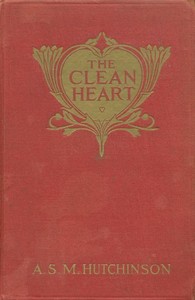
The source record for The Clean Heart — A Reader’s Guide measures this digital text at 108,291 words, 7 hr 51 min estimated reading time, and 9 detected text sections.
The text analysis averages about 13.3 words per sentence, while the detected sections provide another way to judge how the source is divided.
Project Gutenberg metadata also associates the work with “Authors -- Fiction,” connecting these edition facts with the source record’s subject description.
Explore this collection
These alternatives are selected using recorded categories and estimated reading time.
About 460 minutes
Machines Inventions Early Science Fiction
105,689 recorded words. 11 minutes difference from this book's estimate.
View Gutenberg source #59499About 443 minutes
Machines Inventions Early Science Fiction
101,710 recorded words. 28 minutes difference from this book's estimate.
View Gutenberg source #64567About 416 minutes
Machines Inventions Early Science Fiction
95,531 recorded words. 55 minutes difference from this book's estimate.
View Gutenberg source #60455Search stored excerpts and compare books → Choose by your preferences →
Choices use stored catalog measurements. Estimates vary with reading speed. A shared category is a catalog label, not a claim that two books have the same argument or literary quality.
Search reads excerpt text stored with this catalog and links to its associated Gutenberg record. The connection is stored in the site database; this tool does not recheck that every excerpt is word-for-word identical to that external record. Excerpt search does not cover every chapter and does not verify historical publication dates.
Catalog snapshot checked: 2026-09-26. Coverage: 98 public books, 98 available source excerpts.
Calculated from edition completeness, EPUB availability, text structure and catalogue metadata. Not a user rating.
Total of 100 points, scaled to a 2.5-5.0 range. Editions with an empty description or a missing EPUB file are not scored.
Public-domain source text
The source text is kept in the dedicated reader, separate from this catalogue record and its commentary.
The novel opens with Mr. Wriford gripping a woman's hands, his trembling and burning eyes contrasting with her cool firmness and laughing lightness. The prose immediately establishes a pattern of physiological detail—'rush of blood,' 'lift and surge through all his pulses'—that recurs throughout the excerpts, linking emotional states to bodily sensations. Hutchinson renders Wriford's mental fragmentation through syntax: sentences that start, pause, and restart, mirroring the 'baffling lapse of thought' that follows each surge.
The narrative voice shifts markedly across the five books. In Book One, a close third-person follows Wriford's internal chaos; Book Two introduces a wry, almost comic tone with chapter titles like 'Intentions, Before having his hair cut, of a Wagoner.' Later sections adopt a more meditative register, as in Book Four's 'Questions without Answers,' where repetition of 'Why? How? How? Why?' becomes a rhythmic device for obsessive rumination.
The excerpts reveal a deliberate pacing that accelerates and decelerates with Wriford's mental state. In the opening pages, short clauses and dashes create a staccato effect: 'trembling, trembling; but her eyes were laughing, laughing.' This rhythmic doubling—verbs repeated, phrases mirrored—conveys a mind caught between opposing sensations. Later, in the convalescent ward, the prose slows to a near-monotone, with the oldest sea-captain's repeated line 'I've got me portograph in the Daily Mirror paper' functioning as a refrain that underscores Wriford's own fixation.
Hutchinson varies paragraph length to signal shifts in focus. Long, winding paragraphs in Book Four's 'Questions without Answers' build a sense of circular logic, while shorter paragraphs in Book Two's chapter headings—some as brief as 'First Person Singular'—create abrupt changes in tempo. The effect is a narrative that breathes with its protagonist's agitation and stillness.
The novel employs multiple narrative registers that sometimes collide. Book One's third-person is tightly focalized through Wriford, but Book Two shifts to a more detached, almost satirical voice—evident in chapter titles like 'Passionate Attachment to Liver of a Wagoner.' This tonal break suggests a deliberate fragmentation of perspective, as if the narrator itself is unstable.
In Book Four, the voice becomes interrogative, with paragraphs composed entirely of questions: 'Why made for him? How?' The repetition of 'Why? How? How? Why?' mimics Wriford's obsessive search for meaning. Notably, the narrative occasionally adopts the idiom of other characters, such as the sea-captain's colloquial 'portograph,' creating a polyphonic texture that contrasts with Wriford's refined interiority. These shifts in voice are not merely stylistic; they chart Wriford's movement from isolation toward a broader, more chaotic social world.
Recurring phrases and images function as structural anchors across the excerpts. The phrase 'clean heart' from the Psalm epigraph echoes in the title and in Wriford's quest, but the excerpts never define it explicitly. Instead, the novel circles around the concept through repeated motifs: hands (cool, firm, trembling), water (the sea, the drop, the 'water that swells and sucks'), and the act of sacrifice.
Mr. Puddlebox's jump is revisited obsessively in Book Four, with the same details—'the ledge, that drop into the water, that lumped-up body bobbing round the cliff'—repeated almost verbatim. This repetition does not clarify the event but deepens its mystery, suggesting that the narrative itself is trapped in a loop. Similarly, the sea-captain's boast about his photograph recurs, a comic counterpoint to Wriford's earnest brooding. These echoes create a sense of time as non-linear, where past events resurface with undiminished force.
Readers attentive to shifts in narrative pace will find a novel that enacts its protagonist's psychological journey through its very syntax. The alternation between frantic, fragmented prose and slow, meditative passages rewards careful attention to rhythm. Hutchinson's use of repetition—both as a stylistic tic and a thematic device—invites interpretation of what it means to be 'haunted' by an idea. The excerpts offer no resolution, only the persistent, unanswered questions that drive the narrative forward.
There’s a particular loneliness in watching a mind turn itself inside out, seeking an impossible wholeness, as in The Clean Heart. It reminds me of another quiet shelf-companion, one where secrets settle into country air. Both understand that truth often whispers through a fractured voice. For years now, they’ve sat near my heart, patient neighbors. The Markenmore Mystery — Context and Discussion keeps that same faithful silence.
Your answers remain private and are stored only in this browser.