About 49 minutes
Tennyson — Themes and Context
Machines Inventions Early Science Fiction
11,096 recorded words. 10 minutes difference from this book's estimate.
View Gutenberg source #61764
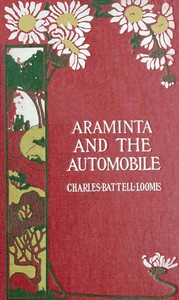
This digital edition of Araminta and the Automobile — Themes and Context is described by source-level measurements including 13,405 words, 59 min estimated reading time, and 6 detected text sections.
The text analysis averages about 18.7 words per sentence, while the detected sections provide another way to judge how the source is divided.
Project Gutenberg metadata also associates the work with “Short stories, American,” connecting these edition facts with the source record’s subject description.
Explore this collection
These alternatives are selected using recorded categories and estimated reading time.
About 49 minutes
Machines Inventions Early Science Fiction
11,096 recorded words. 10 minutes difference from this book's estimate.
View Gutenberg source #61764About 46 minutes
Machines Inventions Early Science Fiction
10,512 recorded words. 13 minutes difference from this book's estimate.
View Gutenberg source #60229About 171 minutes
Machines Inventions Early Science Fiction
39,193 recorded words. 112 minutes difference from this book's estimate.
View Gutenberg source #58945Search stored excerpts and compare books → Choose by your preferences →
Choices use stored catalog measurements. Estimates vary with reading speed. A shared category is a catalog label, not a claim that two books have the same argument or literary quality.
Search reads excerpt text stored with this catalog and links to its associated Gutenberg record. The connection is stored in the site database; this tool does not recheck that every excerpt is word-for-word identical to that external record. Excerpt search does not cover every chapter and does not verify historical publication dates.
Catalog snapshot checked: 2026-09-26. Coverage: 98 public books, 98 available source excerpts.
Calculated from edition completeness, EPUB availability, text structure and catalogue metadata. Not a user rating.
Total of 100 points, scaled to a 2.5-5.0 range. Editions with an empty description or a missing EPUB file are not scored.
Public-domain source text
The source text is kept in the dedicated reader, separate from this catalogue record and its commentary.
Charles Battell Loomis opens his collection with a mock-serious preface in which he poses as a "poor writer" who "made believe that he had bought an automobile" and rode around with Araminta. This framing establishes a self-aware, gently ironic tone that persists throughout the stories. The author's voice is chatty and digressive, often breaking the fourth wall to address the reader directly or to comment on the conventions of storytelling—as when he notes that "Christmases in stories are always snowy and frosty" while the actual Christmas in the tale is damp and warm. This playful tension between literary expectation and mundane reality is a recurring structural device.
Loomis cultivates a persona of the hapless, daydreaming writer who compensates for his own lack of daring by inventing automotive adventures. In the preface, he claims to have lacked the nerve to ride in real automobiles, so he "set others to riding in automobiles that he made himself in his study." This self-deprecating introduction primes the reader for a narrator who is both participant and observer, often stepping back to comment on the action. For instance, when describing Orville's methodical nature, the narrator adds a wry aside: "Orville, it will be seen, was of a sanguine disposition." These interjections create a conversational rhythm, as if the author is confiding in the reader. The narrative voice also indulges in playful exaggerations, such as the imagined critical comparisons to Charles Dickens or Robert Louis Stevenson, which undercut any pretension to high literary seriousness.
The stories often hinge on small, mundane obstacles that escalate into comic crises. In the excerpt, Orville's carefully planned Christmas Eve is derailed by a slip on orange-peel, leaving him "white about the gills" and unable to attend a crucial dinner. Loomis builds tension through meticulous scheduling—Orville sends a telegram, notes acceptance, then joins the shopping crowd—only to undercut it with a sudden, almost absurd accident. The pace shifts from the leisurely accumulation of detail to abrupt physical comedy. Similarly, the preface promises a "cross country trip" that will cause critics to rave, but the actual narrative remains grounded in domestic mishaps and romantic misunderstandings. This contrast between the grand adventure implied by the title and the small-scale, character-driven plots is a deliberate structural choice, keeping the stories brisk and unpredictable.
Although the excerpts provide only glimpses of the automobile itself, it functions as a catalyst for social and romantic complications. The title story likely involves Araminta and her automobile, but the machine is less a subject than a prop that enables encounters and misadventures. In the preface, Loomis describes his characters as "Cheerful Americans" going out for rides, suggesting that the automobile is a vehicle for character interaction rather than a focus of technical description. The catalog subjects list "Automobiles -- Fiction" and "Short stories, American," indicating that the car is a recurring element across the collection. The author's note that the stories were originally published separately (1900–1903) in periodicals like The Saturday Evening Post and The Century Co. suggests they were written to suit magazine audiences, with each story offering a self-contained episode of automotive misadventure or romantic tension.
Readers approaching Araminta and the Automobile should expect a light, episodic collection that prizes character and voice over plot mechanics. Loomis's narrative style rewards attention to his wry asides and self-conscious commentary on storytelling conventions. The automobile, while central to the premise, often recedes into the background, allowing the human foibles of his characters to take the foreground. These stories are best enjoyed as period pieces that capture the early enthusiasm for motoring while gently mocking the very excitement they depict.
We’d finished laughing at Loomis’s bumbling automobilists, so full of charm yet utterly lost. That same sense of good-natured chaos stayed with me, fragile and slipping away, until I opened Nordenholt's Million — Background and Themes. Both share a quiet wink at ambition’s folly, though one is a giggle and the other, I’m afraid, a steadier, greyer glance toward things not often spoken aloud.
Save your reaction, strongest insight, and memorable passage.