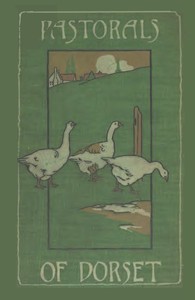
Pastorals of Dorset — Background and Themes

(0 User reviews)   210
Francis, M. E., 1859-1930, Cooper, Claud C. Du Pré [Illustrator] Project Gutenberg 2021 Not confirmed
Short stories; Country life -- Fiction; Dorset (England) -- Fiction Readers of public-domain and historical texts
Project Gutenberg digital edition en

Edition facts

Words 70,868
Reading time 309 min
Text sections 7

For Pastorals of Dorset — Background and Themes, the stored edition analysis reports 70,868 words, 5 hr 9 min estimated reading time, and 7 detected text sections.

The text analysis averages about 17.9 words per sentence, while the detected sections provide another way to judge how the source is divided.

Project Gutenberg metadata also associates the work with “Short stories,” connecting these edition facts with the source record’s subject description.

Explore this collection

Compare your next read

These alternatives are selected using recorded categories and estimated reading time.

Search stored excerpts and compare books → Choose by your preferences →

How these choices and excerpts are prepared

Choices use stored catalog measurements. Estimates vary with reading speed. A shared category is a catalog label, not a claim that two books have the same argument or literary quality.

Search reads excerpt text stored with this catalog and links to its associated Gutenberg record. The connection is stored in the site database; this tool does not recheck that every excerpt is word-for-word identical to that external record. Excerpt search does not cover every chapter and does not verify historical publication dates.

Catalog snapshot checked: 2026-09-26. Coverage: 98 public books, 98 available source excerpts.

M. E. Francis's collection of short stories set in early 20th-century Dorset, focusing on rural life and dialect. The excerpts reveal a tension between pastoral imagery and harsh realities, such as poverty and institutional care, challenging the idyllic catalog subjects.
Share
Editorial Edition Score 4.7/5

Calculated from edition completeness, EPUB availability, text structure and catalogue metadata. Not a user rating.

How this score is calculated
  • Description quality20 pts
  • Title & short description10 pts
  • Source metadata20 pts
  • Text length15 pts
  • Chapters / structure15 pts
  • EPUB file integrity20 pts

Total of 100 points, scaled to a 2.5-5.0 range. Editions with an empty description or a missing EPUB file are not scored.

Edition quality

Public-domain source text

Read the source text

The source text is kept in the dedicated reader, separate from this catalogue record and its commentary.

M. E. Francis's Pastorals of Dorset opens with a shepherd, Farmer Joyce, whose description as a 'quaint, picturesque, pastoral figure' in smock frock and corduroys seems to promise a bucolic idyll. Yet the catalog subjects—'Country life' and 'Dorset (England)'—are undercut by the excerpts' attention to economic hardship and social institutions. The collection's title suggests gentle rural sketches, but the stories quickly reveal a world where a woman's 'rosy plate' is confiscated in a workhouse, and where the dialect phrase 'I be mazed' signals bewilderment rather than contentment.

Pastoral as a Veil

The opening story, 'Shepherd Robbins,' introduces Farmer Joyce as a figure of stability, his 'large contemplative gaze' scanning horizons. Yet the catalog subject 'Country life' is complicated by the story's undercurrent of anxiety: Joyce's face wears 'a puzzled, not to say perturbed, expression.' The pastoral setting—sheep pens, pitchforks, smock frocks—serves as a backdrop for concerns that are far from serene. Francis uses the trappings of rural life to frame stories about loss, poverty, and social change, suggesting that the pastoral mode is a lens, not a guarantee of peace.

Dialect and Dignity

The excerpts are rich in Dorset dialect, with phrases like 'I d' 'low I'd rather have my own' and 'Bain't there no knives nor plates?' This linguistic texture grounds the stories in a specific place and class. However, the dialect is not merely decorative; it conveys the characters' agency and resistance. When Maria pleads to keep her 'rosy plate,' her dialect emphasizes her personal attachment and dignity. The matron's standard English, by contrast, represents institutional rigidity. Francis uses dialect to highlight the gap between individual worth and bureaucratic rules, a tension that the catalog subject 'Short stories' does not capture.

The Workhouse as a Counter-Pastoral

In 'The Rosy Plate,' the workhouse is described with stark detail: a 'large whitewashed room,' a 'bare deal table with benches,' and tin mugs. Maria's loss of her shawl and plate—'all as I've a-left in the world'—is a direct assault on her identity. This institutional setting contrasts sharply with the pastoral imagery of the first story. The catalog subjects do not mention poverty or social welfare, yet the excerpts devote considerable space to the workhouse's dehumanizing rules. Francis juxtaposes the rural landscape with the Union's 'stony portals,' suggesting that Dorset's countryside contains not just idyllic farms but also places of confinement.

Readers should attend to the interplay between the collection's pastoral title and its unsentimental episodes. The dialect demands careful reading, but rewards with insight into character. The excerpts are incomplete, so the full arc of stories like 'The Rosy Plate' remains unknown, but the workhouse scenes indicate that Francis does not shy from social critique. Approach these pastorals as layered narratives where the landscape is both setting and foil.

Reading about Dorset’s hard winters behind the pretty hedgerows, I remembered my grandmother’s clipped stories of village poverty she never dressed up. That same quiet ache surfaced in Nameless River — Edition Insights, where the current beneath calm water carries things unsaid. Both books feel less like landscapes and more like held breath, letting the truth settle softly.

There are no reviews for this eBook.

0
0 out of 5 (0 User reviews )

Add a Review

Your Rating *
There are no comments for this eBook.

Reader reflection

What did you think of this book?

Answer a few questions and save a private reflection on this device.

Your progress 0 / 10
1

What is your current status with this title?

2

Was reading this book enjoyable?

3

Is this a title you would suggest to others?

4

How demanding did the text feel?

Related eBooks