About 214 minutes
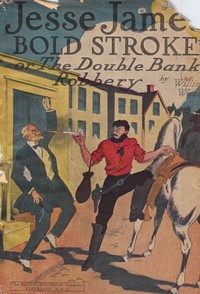
Jesse James' Bold Stroke; Or, The Double Bank Robbery — Reading Notes
Fantasy Juvenile Worlds
49,095 recorded words. 11 minutes difference from this book's estimate.
View Gutenberg source #62236
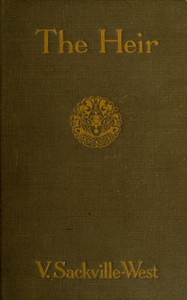
For The heir: A love story — Background and Themes, the stored edition analysis reports 51,554 words, 3 hr 45 min estimated reading time, and 8 detected text sections.
The text analysis averages about 20.1 words per sentence, while the detected sections provide another way to judge how the source is divided.
Project Gutenberg metadata also associates the work with “Inheritance and succession -- Fiction,” connecting these edition facts with the source record’s subject description.
Explore this collection
These alternatives are selected using recorded categories and estimated reading time.
About 214 minutes
Fantasy Juvenile Worlds
49,095 recorded words. 11 minutes difference from this book's estimate.
View Gutenberg source #62236About 204 minutes
Fantasy Juvenile Worlds
46,823 recorded words. 21 minutes difference from this book's estimate.
View Gutenberg source #64852About 247 minutes
Fantasy Juvenile Worlds
56,757 recorded words. 22 minutes difference from this book's estimate.
View Gutenberg source #62820Search stored excerpts and compare books → Choose by your preferences →
Choices use stored catalog measurements. Estimates vary with reading speed. A shared category is a catalog label, not a claim that two books have the same argument or literary quality.
Search reads excerpt text stored with this catalog and links to its associated Gutenberg record. The connection is stored in the site database; this tool does not recheck that every excerpt is word-for-word identical to that external record. Excerpt search does not cover every chapter and does not verify historical publication dates.
Catalog snapshot checked: 2026-09-26. Coverage: 98 public books, 98 available source excerpts.
Calculated from edition completeness, EPUB availability, text structure and catalogue metadata. Not a user rating.
Total of 100 points, scaled to a 2.5-5.0 range. Editions with an empty description or a missing EPUB file are not scored.
Public-domain source text
The source text is kept in the dedicated reader, separate from this catalogue record and its commentary.
From its first sentence, The Heir: A Love Story announces a writer attentive to the physical world. Miss Chase lies dead on her red silk four-poster, the sheet raised by her aristocratic nose into a ridge, her hands and feet forming points like an effigy. Sackville-West dwells on the body's geometry, then cuts to a thread of sunshine alive with dust-motes—a detail that will recur as a motif of intrusion and vitality. The opening conversation between solicitor and nephew is a study in indirection: they discuss funeral arrangements and the inconvenience of London people, but never the dead woman herself. Their resentment is directed at the sheeted figure, a silent accusation that sets the tone for a narrative about inheritance in all its forms.
Alice Jennings's rebellion is staged as a series of deliberate, almost choreographed movements. When she rejects her family, she unclasps her hands from her elbows and tosses her right hand up in a gesture the narrator calls 'definitely histrionic, as one who tosses a feather to the wind.' Her family reads this as a symbol and an enemy. Sackville-West uses the language of theatre throughout: Alice sees herself alone in a deserted theatre with holland covers over the stalls, the stage yawning at her. The family's oil-lamp becomes a prop in a domestic drama. These theatrical metaphors do not diminish Alice's sincerity; rather, they underscore the performative nature of class identity and the effort required to break from it.
The narrator's vocabulary marks the social terrain with precision. The Jennings family belongs to a class 'inimical to the exotic, mistrustful of the new, tenacious of the conventions that were as cement to its masonry.' Words like 'sagacious,' 'shrewd,' and 'nicely knowing safety from danger' carry an edge of contempt, yet the prose remains clinical. When Alice becomes Lydia Protheroe, her name drops from her 'like a piece of old skin'—a simile that suggests both renewal and violence. The narrator notes that Lydia 'had never even had a mother,' a statement that is both literal and symbolic, severing her from lineage. The diction shifts accordingly: Alice's hair is 'sleek,' Lydia's will become 'rumpled' and 'curly.' The transformation is registered in the very texture of the language.
Sackville-West invests domestic objects with psychological force. Miss Chase's four-poster, the lavender bags in every drawer, the handkerchiefs and gloves—these are not mere description but evidence of a life organized around propriety. The solicitor notes approvingly that everything is 'spick and span,' and the old lady would tap her stick on the boards to scold servants. Later, the oil-lamp of the family parlour becomes a symbol of snug security that Alice must reject. The narrator contrasts the 'glare of the lamplight' with the 'oil-lamp of the warm parlour of home,' a distinction that captures the tension between public ambition and private comfort. Objects here are never neutral; they carry the weight of expectation and memory.
The narrator maintains a cool, ironic distance from the characters, particularly in the opening scene. Mr. Nutley's fussing over funeral arrangements and Mr. Chase's peevish concern for his time are rendered with a detachment that borders on satire. The dead woman is reduced to a shape under a sheet, her humanity subordinated to the logistics of burial. Yet the irony is not cruel; it is a lens through which Sackville-West examines the mechanics of inheritance. When Alice's father shakes his finger and warns her not to exchange the oil-lamp for the glare of lamplight, the narrator records his 'figure of speech' without comment, letting the cliché speak for itself. This narrative strategy allows the reader to see both the family's genuine distress and their inability to articulate it beyond convention.
The Heir: A Love Story rewards attention to its surfaces—the precise gestures, the loaded objects, the theatrical framing of social life. Sackville-West does not offer easy sympathy; she asks readers to observe how people perform their roles, even in moments of crisis. The novella's brevity (just over 50,000 words) belies its density of observation. Readers who attend to the prose itself will find a study of rebellion and constraint that works through implication rather than declaration.
I remember the weight of my grandmother’s china cabinet, objects that seemed to hold her silence. Reading Sackville-West’s precise gestures brought that back, that ache of becoming someone else inside a familiar room. A similar restlessness surfaced in another book, where departure felt less like escape and more like necessary breath, The Convict Ship, Volume 1 (of 3) — Themes and Context being its quiet counterpart in imagined distance.
Create a short personal record of your experience with this book.