About 248 minutes
Smoke of the .45 — Story, Setting & Ideas
Fantasy Juvenile Worlds
57,025 recorded words. 1 minutes difference from this book's estimate.
View Gutenberg source #63072
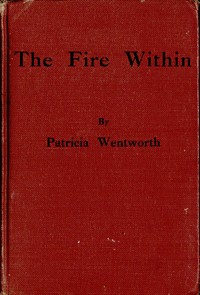
The Fire Within — Reading Companion can be approached with a clearer sense of reading commitment from its source measurements: 56,757 words, 4 hr 7 min estimated reading time, and 8 detected text sections.
The text analysis averages about 12.6 words per sentence, while the detected sections provide another way to judge how the source is divided.
Project Gutenberg metadata also associates the work with “Sisters -- Fiction,” connecting these edition facts with the source record’s subject description.
Explore this collection
These alternatives are selected using recorded categories and estimated reading time.
About 248 minutes
Fantasy Juvenile Worlds
57,025 recorded words. 1 minutes difference from this book's estimate.
View Gutenberg source #63072About 257 minutes
Fantasy Juvenile Worlds
59,089 recorded words. 10 minutes difference from this book's estimate.
View Gutenberg source #59653About 257 minutes
Fantasy Juvenile Worlds
59,038 recorded words. 10 minutes difference from this book's estimate.
View Gutenberg source #60096Search stored excerpts and compare books → Choose by your preferences →
Choices use stored catalog measurements. Estimates vary with reading speed. A shared category is a catalog label, not a claim that two books have the same argument or literary quality.
Search reads excerpt text stored with this catalog and links to its associated Gutenberg record. The connection is stored in the site database; this tool does not recheck that every excerpt is word-for-word identical to that external record. Excerpt search does not cover every chapter and does not verify historical publication dates.
Catalog snapshot checked: 2026-09-26. Coverage: 98 public books, 98 available source excerpts.
Calculated from edition completeness, EPUB availability, text structure and catalogue metadata. Not a user rating.
Total of 100 points, scaled to a 2.5-5.0 range. Editions with an empty description or a missing EPUB file are not scored.
Public-domain source text
The source text is kept in the dedicated reader, separate from this catalogue record and its commentary.
Patricia Wentworth opens The Fire Within with a chapter titled “Mr. Mottisfont’s Opinion of his Nephew,” immediately establishing a tone of dry, familial criticism. The old man’s blunt assessment—“a damned prig”—is delivered with a rhythmic, almost theatrical deliberation, and the narrative voice quickly shifts between his sardonic observations and David Blake’s professional detachment. The scene is set in a sickroom, but the focus is not on illness: it is on inheritance, character judgment, and the unspoken history between the men. Wentworth’s dialogue carries the weight of implication, with pauses and gestures—like David swinging his arm over a carved bedpost—doing as much work as the words themselves.
Wentworth’s diction in the opening chapter is precise and economical. Old Mr. Mottisfont’s speech is peppered with interjections—“Damn it all”—and a colloquial rhythm that contrasts with David’s more measured replies. The narrator notes that David “remembered having heard his mother say” that both Mottisfont brothers had loved the same woman, a detail slipped in without emphasis, yet it colors every subsequent exchange. The dialogue is layered: what is said is often less important than what is withheld. When David refuses the inheritance, his “Nary penny, sir” is delivered with a laugh, but the grey eyes “twinkled” in a way that suggests more than amusement. Wentworth uses such small physical cues—a swing of the arm, a change in eye expression—to signal emotional undercurrents that the characters themselves do not articulate.
David Blake’s voice shifts markedly between the early scene with Mottisfont and his later conversation with Elizabeth. In the sickroom, he is playful yet guarded; with Elizabeth, his speech becomes raw and confessional. Wentworth marks this change through vocabulary and sentence rhythm. David describes his insomnia with a series of metaphors that grow increasingly visceral: his brain is “drunk with sleep—marshy with it, water-logged.” The repetition of “sleep” and the image of a single point of consciousness “left high and dry—tortured” create a claustrophobic interiority. Elizabeth’s responses are deliberately calm—she “spoke very gently”—and her stillness is contrasted with his agitation. Wentworth does not tell the reader that David is exhausted; she lets his language, with its broken syntax and desperate imagery, perform the work.
The physical settings in the excerpts are rendered with sensory specificity that reinforces the characters’ emotional conditions. In Elizabeth’s room, the “tall yellow tulips which smell like Maréchal-Niel roses” and the “soft stuff” of her dress that “made no sound” create an atmosphere of quiet containment. The room is “very still, and very sweet,” and David finds the “sweetness and the stillness” grateful. This is not mere description; it is a counterpoint to his internal chaos. Earlier, the sickroom of Mr. Mottisfont is dominated by the “large four-post bed” with carved cherubs’ heads, a detail that “had always amused its owner considerably.” Wentworth uses such objects to hint at character: the old man’s amusement at the cherubs suggests a wry, unromantic view of mortality. The falling log in Elizabeth’s fire and the darkening room mark the passage of time and the deepening of their conversation.
Two motifs recur in the excerpts: the idea of being “broke” or unable to start fresh, and the contrast between stillness and agitation. David tells Elizabeth he is “three parts broke” and lacks the energy to leave; later, he describes his brain as “water-logged.” The word “broke” echoes his earlier refusal of the five-thousand-pound legacy, linking financial and psychological depletion. Elizabeth’s stillness is emphasized twice: David says “You sit so still. No one else sits so still,” and she laughs, calling herself “inert.” He corrects her, calling it “strength—force—stability.” This exchange encapsulates a central tension in the novel: the appearance of passivity versus actual resilience. Wentworth also uses the motif of sleep—or its absence—as a structural device, moving from Mottisfont’s bed to David’s insomnia to Elizabeth’s offer to “send you to sleep.” The progression suggests a search for relief that may or may not be granted.
Wentworth’s prose rewards attention to what is left unsaid. The murder hinted at in the catalog subjects does not appear in these excerpts, but the groundwork for conflict is laid in the characters’ restrained exchanges and the weight of past relationships. Readers should watch for how Wentworth uses small gestures—a glance, a pause, a shift in tone—to convey motives that the characters themselves may not fully acknowledge. The novel’s title, drawn from Matthew Arnold, points to an inner fire that may be creative or destructive; the excerpts suggest it is the latter, at least for David Blake.
I’ve always found a certain quiet kinship between Wentworth’s weary soul and the restless hearts aboard The Convict Ship. Both stories know how solitude presses close, how a single glance can carry a world of unspoken fear. One watches a man unravel in a drawing-room; the other, on a crowded deck. Different seas, same lonely tide. The Convict Ship, Volume 1 (of 3) — Themes and Context holds that ache tenderly.
Build a private reading journal entry for this title.