About 34 minutes
Up in the garret — Background and Themes
Fantasy Juvenile Worlds
7,800 recorded words. 7 minutes difference from this book's estimate.
View Gutenberg source #63049
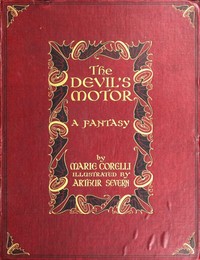
The Devil's Motor: A Fantasy — Context and Discussion can be approached with a clearer sense of reading commitment from its source measurements: 6,118 words, 27 min estimated reading time, and 1 detected text section.
The text analysis averages about 22.7 words per sentence, while the detected sections provide another way to judge how the source is divided.
Project Gutenberg metadata also associates the work with “Fantasy fiction,” connecting these edition facts with the source record’s subject description.
Explore this collection
These alternatives are selected using recorded categories and estimated reading time.
About 34 minutes
Fantasy Juvenile Worlds
7,800 recorded words. 7 minutes difference from this book's estimate.
View Gutenberg source #63049About 164 minutes
Fantasy Juvenile Worlds
37,498 recorded words. 137 minutes difference from this book's estimate.
View Gutenberg source #63806About 174 minutes
Fantasy Juvenile Worlds
39,846 recorded words. 147 minutes difference from this book's estimate.
View Gutenberg source #65012Search stored excerpts and compare books → Choose by your preferences →
Choices use stored catalog measurements. Estimates vary with reading speed. A shared category is a catalog label, not a claim that two books have the same argument or literary quality.
Search reads excerpt text stored with this catalog and links to its associated Gutenberg record. The connection is stored in the site database; this tool does not recheck that every excerpt is word-for-word identical to that external record. Excerpt search does not cover every chapter and does not verify historical publication dates.
Catalog snapshot checked: 2026-09-26. Coverage: 98 public books, 98 available source excerpts.
Calculated from edition completeness, EPUB availability, text structure and catalogue metadata. Not a user rating.
Total of 100 points, scaled to a 2.5-5.0 range. Editions with an empty description or a missing EPUB file are not scored.
Public-domain source text
The source text is kept in the dedicated reader, separate from this catalogue record and its commentary.
From its first lines, The Devil's Motor announces itself as a work of heightened, incantatory prose. The narrative opens at midnight with a car that tears along “the pale line dividing the Darkness from the Dawn,” a phrase that establishes the story’s central axis: a boundary between realms, traversed at speed. The Devil, crowned with fire and winged like a bat, speaks in long, exclamatory sentences that blend biblical rhetoric with the vocabulary of early motoring—wheels, glare, stench, roar. Corelli does not merely describe a supernatural vehicle; she makes the car itself a force that reshapes the world, reducing forests to broken reeds and mountains to quarries. The prose is deliberately overwrought, matching the scale of its subject.
The Devil’s speech dominates the excerpt, and his diction is carefully chosen to fuse damnation with industrial progress. He calls himself “the Avenger, the Destroyer, the Torturer of Souls,” but also boasts that “the men of these latter days are my food and sustenance.” Corelli gives him a rhythmic, almost poetic cadence: “On, on, over all beauty, all tenderness, all truth I ride.” The repetition of “on” mimics the motion of the car, while the list of abstractions (beauty, tenderness, truth) sets up a moral contrast. The Devil’s self-identification as “Arch-enemy of God” is conventional, but his claim that “the Kingdom of Hell grows wide and deep,—praise be to Man who makes it!” shifts blame onto humanity. This is not a tempter but a gleeful consumer of human vice. The voice is consistent: imperious, mocking, and relentless, with no softening or irony.
Corelli’s descriptive passages rely on a limited but intense palette: glare, stench, smoke, flame, and blackness. The car’s passage turns the world “black and sulphureous,” and “all sweetness” is quenched from the air. The transformation of landscape is swift and total: forests drop like broken reeds, mountains crumble, seas dry into “black and muddy waters.” The new cities that rise are “bristling with thousands upon thousands of chimneys belching forth sickening smoke.” This is not a subtle decay but a violent, almost instantaneous replacement of the natural by the industrial. The sensory overload—noise, stench, glare—is meant to overwhelm the reader, mirroring the Devil’s own overwhelming presence. The illustrations by Arthur Severn, referenced in the captions, likely reinforced this visual intensity, though the text alone carries the weight of the apocalypse.
The book’s physical presentation is integral to its effect. The excerpt shows that the text was originally set with illustrated capital letters and captioned plates, and the Project Gutenberg edition notes adjustments made to preserve readability: missing quotation marks added, captions moved below illustrations, and mid-paragraph illustrations relocated. These editorial interventions hint at a complex original layout where image and text intertwined. The Devil’s speeches are set off as separate paragraphs, often beginning with a large initial capital, giving them the weight of proclamations. The narrative itself is brief—just over 6,000 words—and reads more like a prose poem or extended allegory than a conventional story. The structure is episodic: the Devil speaks, the landscape changes, and the car rushes onward, with no named human characters to interrupt the monologue.
The motorcar is not merely a vehicle but the central symbol of the fantasy. Corelli describes it as a “huge Car” with “giant wheels,” “great lights,” and a “muffled roar.” It moves along a line between darkness and dawn, suggesting a liminal space. The Devil steers it, but the car itself seems to generate the destruction: “the fairness of the world grew black” as it flew. The car is both literal and metaphorical—a machine that embodies speed, power, and indifference. In the Devil’s rhetoric, it becomes an instrument of divine punishment: “whosoever would scour the air and scorch the earth must run on the straight road of his desire with Me.” The car thus links human ambition (the desire for speed and progress) with demonic agency. Corelli does not explain this connection; she presents it as a given, trusting the image to carry its own meaning.
Readers approaching The Devil's Motor should expect a concentrated, single-voice narrative that prioritizes atmosphere over plot. The fantasy operates through accumulation of apocalyptic imagery rather than character development or dialogue. Pay attention to the rhythm of the Devil’s speeches and the way Corelli uses repetition and exclamation to build momentum. The book’s brevity—under thirty minutes of reading time—makes it possible to experience as a single, sustained declamation. Consider how the illustrated edition might have altered the pacing, with images interrupting or amplifying the text. This is a work that demands to be read aloud, its cadences matching the roar of the demonic engine.
Reading The Devil's Motor, I kept noticing how destruction wore an almost beautiful mask—the gleaming machine, the elegant prose. That odd contrast lingered, and it reminded me of a different sort of sowing altogether. Perhaps something quieter, where the seeds planted are not ruin but something gentler. It made me think of Jewel sowers: a novel — Key Ideas to Explore, and how both books hold a strange, tender care for what they describe, despite their very different fields.
Use these questions to collect your thoughts before moving on.