About 214 minutes
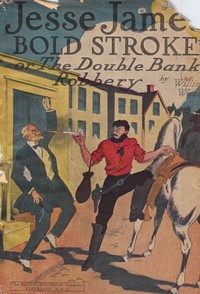
Jesse James' Bold Stroke; Or, The Double Bank Robbery — Reading Notes
Fantasy Juvenile Worlds
49,095 recorded words. 10 minutes difference from this book's estimate.
View Gutenberg source #62236
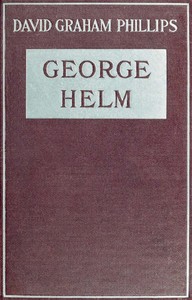
Before opening George Helm — Inside the Classic, the edition data offers a quick orientation: 46,823 words, 3 hr 24 min estimated reading time, and 10 detected text sections.
The text analysis averages about 14.3 words per sentence, while the detected sections provide another way to judge how the source is divided.
Project Gutenberg metadata also associates the work with “Man-woman relationships -- Fiction,” connecting these edition facts with the source record’s subject description.
Explore this collection
These alternatives are selected using recorded categories and estimated reading time.
About 214 minutes
Fantasy Juvenile Worlds
49,095 recorded words. 10 minutes difference from this book's estimate.
View Gutenberg source #62236About 185 minutes
Fantasy Juvenile Worlds
42,457 recorded words. 19 minutes difference from this book's estimate.
View Gutenberg source #58897About 225 minutes
Fantasy Juvenile Worlds
51,554 recorded words. 21 minutes difference from this book's estimate.
View Gutenberg source #60368Search stored excerpts and compare books → Choose by your preferences →
Choices use stored catalog measurements. Estimates vary with reading speed. A shared category is a catalog label, not a claim that two books have the same argument or literary quality.
Search reads excerpt text stored with this catalog and links to its associated Gutenberg record. The connection is stored in the site database; this tool does not recheck that every excerpt is word-for-word identical to that external record. Excerpt search does not cover every chapter and does not verify historical publication dates.
Catalog snapshot checked: 2026-09-26. Coverage: 98 public books, 98 available source excerpts.
Calculated from edition completeness, EPUB availability, text structure and catalogue metadata. Not a user rating.
Total of 100 points, scaled to a 2.5-5.0 range. Editions with an empty description or a missing EPUB file are not scored.
Public-domain source text
The source text is kept in the dedicated reader, separate from this catalogue record and its commentary.
The novel opens not with George Helm himself but with the town of Harrison, described as a firmament of "fixed stars" — its established citizens — suddenly agitated by a dim comet: the arrival of a young man with red whiskers, a funny frock coat, and a stovepipe hat. Phillips devotes the first chapter to how the town sizes up Helm through collective gossip, noting his "nice eyes — gray and deep-set" and his hands "rough from the toil of the fields." The authorial choice to introduce the protagonist entirely through the eyes of others establishes a central tension: Helm is a man to be observed, interpreted, and used by those around him.
Phillips builds the opening around a sustained astronomical metaphor: a comet so dim it is almost invisible draws agitated interest while great fixed stars blaze unnoticed. This figure governs the social dynamics of Harrison, where every new male arrival is scrutinized by women on the lookout for bread-winners and by men sizing up a potential rival or ally. The narrator notes that Helm's appearance offers "no grace or beauty" to detain a husband-seeker, nor any "suggestion of latent possibilities of luxury-providing." Yet the town cannot stop talking about him. The author uses this collective attention to establish Helm as an anomaly — a man whose plainness and seriousness make him conspicuous in a world that values show and connection.
Phillips pays meticulous attention to physical detail as a window into character. Helm's face is "strong, rather homely, stern to sadness in repose, flashing unexpectedly into keen appreciation of wit and fun." His hands are described as so rough that they "would remain the hands of the manual laborer to the end." Later, Senator Sayler studies Helm's jaw — noting its length from ear to chin — and muses that a long jaw signifies "persistence — endurance — and the unafraidness that advances without a tremor." This focus on physiognomy is not merely descriptive; it becomes a tool of political calculation. Sayler reads Helm's body as a text, interpreting his potential for usefulness or danger.
Senator Sayler, the secret power behind the Democratic machine, speaks in a distinctive register: he gives orders "in the form of interrogative suggestions." When boss Hazelrigg complains that Helm is doing his job "too damn well," Sayler replies, "Oh, why not let him alone for the present, Hazelrigg?" The question is a command. Sayler's dialogue is laced with non-committal smiles and satirical silences; he is described as "loquacious" yet falsely reputed taciturn, because he reserves brevity for underlings. Phillips uses this verbal tic to dramatize the gap between public and private power. Sayler's mind runs on "sentimentally romantic" schemes and "sardonic humor" — he imagines Helm's marriage to Eleanor Clearwater as "one of fate's masterpieces at the practical joke."
Sayler's interest in Helm is not purely political. The senator is also a matchmaker, drawn to the "sentimentally romantic" prospect of uniting the earnest, plain Helm with Eleanor Clearwater, an heiress "fond of playing with 'fine ideas'" but dependent on luxury. Phillips presents this as a layer of motivation beneath the surface plot: Sayler "liked the mischievous pranks of fate — with the persons and property and destiny of others." The author thus intertwines political maneuvering with personal manipulation, suggesting that the same instincts drive both. The excerpts do not reveal whether the match succeeds, but they establish that Helm is being positioned — by forces he may not fully perceive — as a pawn in a larger game that mixes ambition, amusement, and cruelty.
Readers attentive to Phillips's craft will notice how he uses the town's gossip, the senator's oblique speech, and the repeated emphasis on Helm's physical plainness to build a portrait of a man who is both transparent and opaque. The novel's interest lies less in plot than in the interplay of perception and reality — how a person is seen, how he is used, and what remains hidden behind a red beard and a homely face.
Reading about George Helm’s red beard and quiet resolve, I found myself thinking of those old reading notes—the ones that linger on a single gesture rather than the whole plot. There’s something similar in how both books treat sincerity as a kind of slow-burning force. I set Inside the Classic down and picked up In Black and White — Reading Notes, and the afternoon softened into a quieter kind of company.
Build a private reading journal entry for this title.