
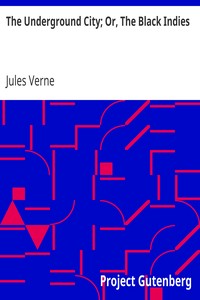
The Underground City; Or, The Black Indies by Jules Verne
Jules Verne, the master of 'what if?', takes us on a trip not across the globe, but straight down into it. 'The Underground City' starts with a legend: the Aberfoyle coal mine in Scotland is played out, abandoned, and supposedly haunted. The old manager, Simon Ford, stubbornly insists there's more coal—and something else—hidden in its deepest tunnels. When he vanishes exploring a blocked-off shaft, his practical, no-nonsense son Harry has to go after him.
The Story
Harry's rescue mission quickly becomes a discovery of a lifetime. He finds his father alive, but that's just the beginning. Simon Ford was right. They've stumbled upon a colossal, natural cavern, a whole secret world with a vast lake and, incredibly, a massive, untouched coal seam. The real shocker? They're not alone. A mysterious, silent figure has been living down there for years. As they work to tap this new resource and build a community—the 'Underground City' of the title—they must solve the puzzle of their silent neighbor and confront the very real dangers of their incredible find, from subterranean gases to the psychological weight of living in eternal night.
Why You Should Read It
This book is classic Verne, but it feels more personal and claustrophobic than his ocean or space adventures. The tension isn't about seeing new countries; it's about the creeping fear and awe of the uncharted dark. Harry is a great anchor—he's logical, brave, and his journey from skeptic to pioneer is really satisfying. The silent stranger adds a layer of gentle mystery that's more about loneliness than villainy. Verne's real magic here is making a hole in the ground feel as vast and wondrous as the open sea. He makes you feel the damp air, hear the drip of water, and share the characters' mix of triumph and unease as they conquer a frontier that literally hangs over their heads.
Final Verdict
Perfect for anyone who loves a good underground adventure (think 'Journey to the Center of the Earth' but more grounded) or has a soft spot for Victorian-era engineering optimism. It's for readers who like their mysteries wrapped in coal dust and their heroes armed with pickaxes and sheer nerve. If you're looking for a shorter, focused Verne tale that explores human spirit and scientific curiosity in a uniquely pressurized setting, this hidden gem is well worth the descent.
This is a copyright-free edition. Share knowledge freely with the world.
James Lee
11 months agoLooking at the bibliography alone, the argument presented in the middle section is particularly compelling. Simple, effective, and authoritative – what else could you ask for?
Elizabeth White
10 months agoI started reading this with a critical mind, the objective evaluation of the pros and cons is very refreshing. A solid investment for anyone's personal development.
Linda Williams
1 month agoA brilliant read that I finished in one sitting.
Paul Martin
3 months agoHaving followed this topic for years, I can say that the practical checklists included are a great touch for real-world use. Top-tier content that deserves more recognition.




Barbara Gonzalez
1 year agoI took detailed notes while reading through the chapters and the objective evaluation of the pros and cons is very refreshing. It’s a comprehensive resource that doesn't feel bloated.