
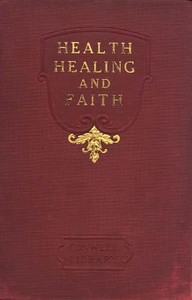
Health, Healing, and Faith by Russell H. Conwell
Russell H. Conwell's Health, Healing, and Faith is a unique little book that feels more like a long, passionate sermon than a medical text. Written over a century ago, it captures a specific moment in American thought where spirituality, psychology, and physical health were deeply intertwined.
The Story
There isn't a plot in the traditional sense. Instead, Conwell lays out his core philosophy across several chapters. He argues that most sickness isn't just a random physical event. He believes worry, fear, doubt, and a lack of faith create a 'diseased mind,' which then manifests as a diseased body. The 'story' is his journey to convince the reader that by cultivating unwavering faith in God, maintaining a cheerful and hopeful attitude, and rejecting negative thoughts, a person can achieve not just spiritual peace, but genuine physical healing. He uses examples from his ministry and observations of life to support this idea, painting a picture of health as a natural state we lose when we lose our spiritual footing.
Why You Should Read It
Reading this today is a fascinating exercise. You have to set aside modern science and step into a different worldview. Conwell's absolute certainty is compelling, even if you don't agree with him. It made me think a lot about the placebo effect and the very real, documented links between mental stress and physical health—concepts we now study with MRIs, but which he attributed purely to divine principle. The book is a powerful reminder of how much cultural beliefs shape our understanding of our own bodies. It's less of a 'how-to' manual and more of a historical artifact that shows the roots of the 'mind over matter' and 'positive thinking' movements that are still with us.
Final Verdict
This book isn't for someone looking for health advice. It's for the curious reader interested in American history, the history of ideas, or the psychology of belief. It's perfect for anyone who enjoys primary sources that show how people thought in the past. You'll read it not to follow its prescriptions, but to understand a piece of our cultural past. Think of it as a conversation with a wise, fervent, and utterly convinced great-grandfather—you listen not to adopt his views, but to understand the world he lived in.
This title is part of the public domain archive. It is available for public use and education.
Karen Lewis
2 months agoTo be perfectly clear, the pacing is just right, keeping you engaged. Highly recommended.
Emily Gonzalez
1 year agoWithout a doubt, the plot twists are genuinely surprising. I couldn't put it down.




Ashley Perez
1 month agoIt’s refreshing to see such a high standard of digital publishing.