About 364 minutes
Cottage Folk — Edition Insights
England London Nineteenth Century Fiction
83,636 recorded words. 14 minutes difference from this book's estimate.
View Gutenberg source #63361
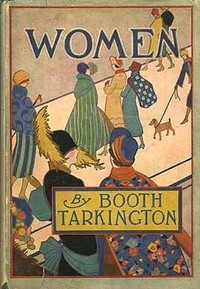
For Women — Inside the Classic, the stored edition analysis reports 86,905 words, 6 hr 18 min estimated reading time, and 11 detected text sections.
The text analysis averages about 15.4 words per sentence, while the detected sections provide another way to judge how the source is divided.
Project Gutenberg metadata also associates the work with “Married people -- Fiction,” connecting these edition facts with the source record’s subject description.
Explore this collection
These alternatives are selected using recorded categories and estimated reading time.
About 364 minutes
England London Nineteenth Century Fiction
83,636 recorded words. 14 minutes difference from this book's estimate.
View Gutenberg source #63361About 393 minutes
England London Nineteenth Century Fiction
90,360 recorded words. 15 minutes difference from this book's estimate.
View Gutenberg source #61925About 362 minutes
England London Nineteenth Century Fiction
83,168 recorded words. 16 minutes difference from this book's estimate.
View Gutenberg source #64917Search stored excerpts and compare books → Choose by your preferences →
Choices use stored catalog measurements. Estimates vary with reading speed. A shared category is a catalog label, not a claim that two books have the same argument or literary quality.
Search reads excerpt text stored with this catalog and links to its associated Gutenberg record. The connection is stored in the site database; this tool does not recheck that every excerpt is word-for-word identical to that external record. Excerpt search does not cover every chapter and does not verify historical publication dates.
Catalog snapshot checked: 2026-09-26. Coverage: 98 public books, 98 available source excerpts.
Calculated from edition completeness, EPUB availability, text structure and catalogue metadata. Not a user rating.
Total of 100 points, scaled to a 2.5-5.0 range. Editions with an empty description or a missing EPUB file are not scored.
Public-domain source text
The source text is kept in the dedicated reader, separate from this catalogue record and its commentary.
The novel opens with a preamble that explicitly questions conventional novelistic structure: Mrs. Dodge argues that women's lives lack a central theme or heroine, being instead 'made up of apparently haphazard episodes.' This framing device sets up a narrative that moves between households, focusing on the social rituals and unspoken tensions of married life in a suburban setting. The excerpts reveal a keen attention to gesture and tone—a character's 'odd and plaintive look' or a wife's 'almost imperceptible stress' on a word—suggesting that meaning often lies beneath polite conversation.
The preamble is not merely a preface but a structural argument. Mrs. Dodge, leading a club discussion, rejects the idea that a novel about women must have a 'centralized conflict or drama.' She insists that her own life—and by extension the lives of the women around her—consists of 'haphazard episodes, some meaningless, others important.' This meta-fictional opening invites readers to consider the book itself as an experiment in representing that diffuse reality. The club setting also establishes a social framework where women publicly debate their own representation, a motif that recurs in scenes of strained domestic performances.
One of the most striking episodes involves a couple, the Braithwaites, whose visit to the Dodges turns on a verbal misunderstanding. When Mr. Braithwaite mentions his former chauffeur named 'Dolling,' Mr. Dodge mishears it as 'darling,' prompting an 'uproarious shout of laughter.' The scene is a miniature study in social performance: Mrs. Braithwaite directs her husband with an 'almost imperceptible stress' and a whip-lash-like gaze, while he obeys 'like a trained monkey.' The laughter defuses tension but also highlights the gap between public decorum and private dynamics—a gap the novel repeatedly explores through dialogue and gesture.
Physical description in the excerpts often carries emotional weight. Mr. Braithwaite is observed to have 'semicircles of darkness' under his eyes, suggesting 'a recent anguish, either physical or mental.' This image of hidden suffering recurs in the text: later, a character's eyes hold 'the look not of a good little boy but of a good little dog, obedient in a painful task.' Such details imply that the characters' polished exteriors mask private pain. The novel's movement between scenes—from club meetings to living rooms—allows these glimpses of vulnerability to accumulate, creating a layered portrait of suburban life.
Chapter titles such as 'Perversity of a Telephone' and 'A Lady Across the Street' signal the importance of boundaries—physical and technological—in shaping interactions. The telephone, a relatively new device in 1925, becomes a source of miscommunication and suspense. Similarly, the hedge that separates properties serves as a literal and symbolic threshold: Mrs. Dodge's reaction to seeing a neighbor 'by the hedge' suggests that such boundaries are porous, allowing private dramas to spill into public view. These recurring elements structure the narrative as a series of encounters across thresholds, where what is said is often less important than what is overheard or glimpsed.
Readers attentive to the novel's structure will notice how each chapter functions as a discrete episode, often centered on a single encounter or domestic scene. The preamble's promise of 'haphazard episodes' is fulfilled not through plot momentum but through the accumulation of small, telling moments. Pay particular attention to the spaces between dialogue—the pauses, the swallowed words, the gestures that contradict speech—as these are where the novel's real drama unfolds.
That book stayed with me because of how it quietly maps the gap between what spouses say and what they mean. Reading it, I thought of The House of Helen — Themes and Context, which carries a similar ache. We watch people perform for each other, then catch them alone. I remembered that feeling long after closing the pages, like a half-finished sentence I kept replaying.
Build a private reading journal entry for this title.









