About 412 minutes
Samantha on the Race Problem — Story, Setting & Ideas
Adventure Picaresque Fiction
94,554 recorded words. 7 minutes difference from this book's estimate.
View Gutenberg source #61608
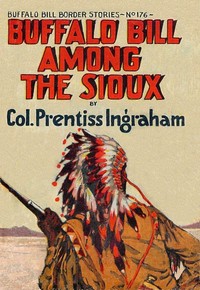
For Buffalo Bill Among the Sioux; Or, The Fight in the Rapids — Story, Setting & Ideas, the stored edition analysis reports 93,009 words, 6 hr 45 min estimated reading time, and 49 detected text sections.
The text analysis averages about 18.6 words per sentence, while the detected sections provide another way to judge how the source is divided.
Project Gutenberg metadata also associates the work with “Dime novels,” connecting these edition facts with the source record’s subject description.
Explore this collection
These alternatives are selected using recorded categories and estimated reading time.
About 412 minutes
Adventure Picaresque Fiction
94,554 recorded words. 7 minutes difference from this book's estimate.
View Gutenberg source #61608About 392 minutes
Adventure Picaresque Fiction
90,029 recorded words. 13 minutes difference from this book's estimate.
View Gutenberg source #62479About 387 minutes
Adventure Picaresque Fiction
88,933 recorded words. 18 minutes difference from this book's estimate.
View Gutenberg source #62057Search stored excerpts and compare books → Choose by your preferences →
Choices use stored catalog measurements. Estimates vary with reading speed. A shared category is a catalog label, not a claim that two books have the same argument or literary quality.
Search reads excerpt text stored with this catalog and links to its associated Gutenberg record. The connection is stored in the site database; this tool does not recheck that every excerpt is word-for-word identical to that external record. Excerpt search does not cover every chapter and does not verify historical publication dates.
Catalog snapshot checked: 2026-09-26. Coverage: 98 public books, 98 available source excerpts.
Calculated from edition completeness, EPUB availability, text structure and catalogue metadata. Not a user rating.
Total of 100 points, scaled to a 2.5-5.0 range. Editions with an empty description or a missing EPUB file are not scored.
Public-domain source text
The source text is kept in the dedicated reader, separate from this catalogue record and its commentary.
This 1906 dime novel by Colonel Prentiss Ingraham, part of the long-running Buffalo Bill series, opens not with its title hero but with a chapter titled “Wild Bill’s Close Call.” The table of contents promises a rapid succession of perils: a grizzly attack, a precipice struggle, a suicide, and a torture stake. The excerpts show a narrative built on brisk dialogue and physical action, with characters identified by epithets like “Bear Killer” and “paleface.” The catalog subjects list “Dime novels” and “Buffalo Bill, 1846-1917 — Fiction,” but the excerpts reveal a story that also features Captain Meinhold and Wild Bill as prominent actors, and the Sioux of the title appear only indirectly through the Ute chief Bear Killer.
The longest excerpt centers on a parley between white soldiers and the Ute chief Bear Killer over two captive girls. The dialogue is blunt and confrontational: Captain Meinhold declares, “I will give you cold steel and lead, and plenty of both, if you don’t give them up!” while Buffalo Bill detects the chief’s uneasy glance toward a cliff. The negotiation hinges on the chief’s claim that the girls were taken “from the red men—not from the palefaces,” a detail that suggests a layered conflict among tribes. The scene ends with Wild Bill riding to investigate, finding “four dead Indians, unscalped.” The excerpts do not reveal the girls’ fate, but the structure—threat, bluff, and a search—is typical of the dime novel formula.
The characters speak in a stylized, formal English meant to convey both frontier toughness and “Indian” idiom. Bear Killer says, “Bear Killer is like the wind; he goes wherever his spirit wills, and asks leave from no man.” Buffalo Bill responds with equal formality: “This chief will speak.” The white characters use threats and impatience: “Talking is not my trade. I had rather fight.” The narrative voice in the appreciation section is more polished, describing Cody’s early life in Kansas and his work as a pony express rider. The contrast between the biographical introduction and the novel’s dialogue highlights the genre’s reliance on stock phrases and dramatic confrontation.
The catalog lists “Buffalo Bill, 1846-1917 — Fiction” and “Dime novels” as subjects, but the excerpts show that the Sioux are not the primary antagonists. The main Indian character is Bear Killer, a Ute chief, and the action involves Utes, Shawnees, and “Snakes” (likely Shoshone). The title’s “Among the Sioux” may refer to a broader setting or a different section of the novel not included in the excerpts. The table of contents includes chapters like “Utes Against Snakes” and “Evil Heart’s Suicide,” indicating multiple tribal conflicts. Readers should note that the catalog subject is a broad label, not a precise summary of the plot.
The excerpts offer a narrow window into a long novel: a single tense negotiation, a few chapters on the contents page, and a biographical appreciation. Readers should expect a fast-paced adventure with frequent shifts in setting and threat, from rapids to caverns to torture stakes. The dialogue-heavy style rewards attention to how characters assert authority through speech. The novel’s value lies in its representation of early twentieth-century popular fiction and its construction of the Buffalo Bill legend.
Reading how Ingraham’s Buffalo Bill speaks over the Ute captives, I couldn't help feeling the weight of voices that never get their turn. That same hush lingers in Cane — Text and Context, though there it aches differently. Some stories rescue, others simply listen. I keep returning to that difference, especially on quiet evenings, wondering which kind I’ve been carrying all along.
Answer a few questions and save a private reflection on this device.









