About 401 minutes
The Cinder Buggy: A Fable in Iron and Steel — Story, Setting & Ideas
England London Nineteenth Century Fiction
92,147 recorded words. 10 minutes difference from this book's estimate.
View Gutenberg source #60593
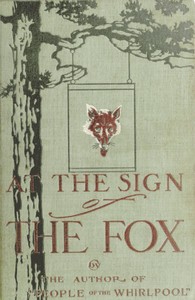
The catalog record for At the Sign of the Fox: A Romance — Themes and Context provides practical reading context through 94,446 words, 6 hr 51 min estimated reading time, and 23 detected text sections.
The text analysis averages about 28.1 words per sentence, while the detected sections provide another way to judge how the source is divided.
Project Gutenberg metadata also associates the work with “Man-woman relationships -- Fiction,” connecting these edition facts with the source record’s subject description.
Explore this collection
These alternatives are selected using recorded categories and estimated reading time.
About 401 minutes
England London Nineteenth Century Fiction
92,147 recorded words. 10 minutes difference from this book's estimate.
View Gutenberg source #60593About 423 minutes
England London Nineteenth Century Fiction
97,271 recorded words. 12 minutes difference from this book's estimate.
View Gutenberg source #59892About 393 minutes
England London Nineteenth Century Fiction
90,360 recorded words. 18 minutes difference from this book's estimate.
View Gutenberg source #61925Search stored excerpts and compare books → Choose by your preferences →
Choices use stored catalog measurements. Estimates vary with reading speed. A shared category is a catalog label, not a claim that two books have the same argument or literary quality.
Search reads excerpt text stored with this catalog and links to its associated Gutenberg record. The connection is stored in the site database; this tool does not recheck that every excerpt is word-for-word identical to that external record. Excerpt search does not cover every chapter and does not verify historical publication dates.
Catalog snapshot checked: 2026-09-26. Coverage: 98 public books, 98 available source excerpts.
Calculated from edition completeness, EPUB availability, text structure and catalogue metadata. Not a user rating.
Total of 100 points, scaled to a 2.5-5.0 range. Editions with an empty description or a missing EPUB file are not scored.
Public-domain source text
The source text is kept in the dedicated reader, separate from this catalogue record and its commentary.
Wright opens At the Sign of the Fox with two hunters pausing at a woodland boundary—a moment of deliberate stillness. The prose matches their careful woodsman habits: guns at half-cock, pipes filled with “the deliberation that is akin to restfulness.” This measured opening establishes a rhythm of observation that the novel sustains, even as it shifts between rural quiet and urban bustle. The narrative voice is precise about physical detail—the “diamond-paned bookcase,” the “brass lion’s mouth” door-knocker—and equally attentive to social cues, such as Mrs. Lawton’s “half backward poise of mingled dignity and courtesy.” These small gestures carry weight, signaling character and class without explicit commentary.
The third-person narrator rarely enters characters’ minds directly; instead, it reports outward signs. Brooke reads the time from a copy of Pilgrim’s Progress on a lower shelf—an oblique detail that suggests her growing familiarity with the household’s “language of such things.” When Lucy Dean is caught off guard by the Hendersons’ arrival, the narrator notes her “confusion unusual for this young person, who prided herself upon never being caught off guard.” The judgment is folded into the observation, not stated as a separate comment. This technique keeps the prose lean and the reader alert to subtext.
The tea-table scene builds a slow, intimate rhythm: Brooke moves a spindle-legged table, Tatters the collie “coax[es] for cookies, by waving one paw in the air.” Then the “clanging of heavy shaft-bells” breaks in, followed by a “vigorous rat-tat-tat” on the knocker. Wright uses sound to mark the transition from private to public. The party of six enters, and the prose accelerates: furs are unwrapped, hair patted at the eagle mirror, fresh tea ordered. The contrast between the earlier quiet and this sudden bustle is sharp, and the narrator notes the shift without commentary, letting the reader feel the intrusion.
Wright invests objects with social meaning. The “quaint spindle-legged table” and “Great-grandma West’s eagle mirror” anchor the Lawton home in a specific heritage. When Charlie Ashton appears “enveloped to the eyes in the most picturesque of furs,” the adjective “picturesque” carries a hint of performance. The narrator does not judge, but the detail stands out against the simpler descriptions of the Lawtons’ belongings. Similarly, Tatters the collie is listed among the “People” in the dramatis personae—“a Person, though disguised as an Old Collie Dog.” This playful classification hints at the novel’s willingness to blur boundaries between human and animal, serious and comic.
Readers may find it useful to track how Wright handles entrances and exits—the way characters arrive, the sounds that precede them, the objects they touch. The novel’s voice is consistent but not static; it adjusts its pace to match the scene’s social temperature. Pay attention to what the narrator chooses to describe in full and what it leaves implied. These choices shape the story as much as any plot event.
Reading At the Sign of the Fox, I kept lingering on those quiet tea-table moments, the way a snow-filled sleigh party could tumble through the stillness. It reminded me of another voice, softer and slower, that holds its own domestic hush—John, A Love Story; vol. 2 of 2 — Edition Insights—where the warmth feels less like a scene and more like a held breath.
Answer a few questions and save a private reflection on this device.









